 English
 Español
 عربى
عربى
In modern industrial production, material handling systems are a crucial link in maintaining continuous production and efficiency. Among the many conveying devices, the Scraper Conveyor, with its unique structural design and efficient conveying capacity, has become an indispensable core equipment in industries such as metallurgy, power generation, chemical engineering, and cement.
Structural Characteristics of the Scraper Conveyor
The Scraper Conveyor mainly consists of a casing, scrapers, chains, a drive device, and a tensioning device. The casing is usually made of welded steel plates, ensuring both the sealing of the conveying process and providing sufficient mechanical strength to withstand the continuous conveying of heavy materials. The scraper is the core component of the equipment; its material is mostly high-strength alloy steel. It is fixed by chains and moves along guide rails, enabling the propulsion of bulk or viscous materials. The chain system provides stable power transmission under high load and continuous operation, while the drive device, through a geared motor and sprocket, ensures the smooth operation of the conveyor. The tensioning device can adjust the tension of the chain, ensuring that the scraper maintains effective contact during material conveying, thus preventing material stagnation or overflow.
The design of the Scraper Conveyor not only focuses on mechanical strength but also considers material characteristics and conveying efficiency. The highly sealed casing and adjustable scraper clearance effectively control dust dispersion and material backflow during the conveying process, improving the environmental friendliness and safety of the system.
Working Principle and Operating Mechanism
The core working principle of the scraper conveyor is "mechanical propulsion." Materials enter the casing from the inlet, and the scrapers move continuously along the chain guide, pushing the materials towards the discharge port. Compared with traditional belt conveyors, the propulsion method of the scraper conveyor allows for stable conveying of bulk, viscous, and high-temperature materials, while avoiding material slippage or stratification during the conveying process. The scrapers, driven by the chains, move along the guide rails, bearing the weight of the material and overcoming frictional resistance, achieving a low-energy consumption and high-efficiency transportation process.
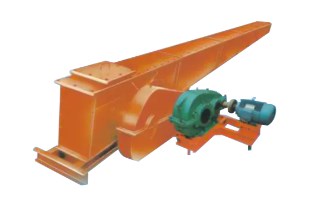
The Scraper Conveyor usually has a bidirectional conveying function, allowing for forward or reverse operation according to process requirements, which is of great value in the flexible layout of production lines. Its stable operating mechanism not only guarantees production efficiency but also reduces equipment failure rates and maintenance costs.
Performance Advantages Analysis
The Scraper Conveyor has significant advantages compared to other conveying methods. The equipment is highly adaptable and can handle the continuous conveying of bulk, granular, viscous, and even high-temperature materials without complex pre-treatment. Material loss during conveying is minimal, as mechanical propulsion reduces friction and impact, ensuring the integrity of the material. The scraper conveyor has a compact structure and good sealing, effectively controlling dust and spillage, meeting modern environmental and safety standards.
In long-term operation, the Scraper Conveyor demonstrates high reliability. The combination of high-strength chains and wear-resistant scrapers allows the equipment to operate continuously and stably under heavy load and long-distance conveying conditions, while reducing the frequency of parts replacement and lowering maintenance costs. Combined with the optimized design of the drive and tensioning systems, the scraper conveyor can achieve high-load operation under low energy consumption conditions, reflecting the dual advantages of energy saving and efficiency in industrial conveying equipment.
Maintenance and Management Strategies
Although the Scraper Conveyor operates stably, scientific maintenance and management are still key to ensuring the long-term efficient operation of the equipment. Components such as the casing, chains, and scrapers require regular inspection for wear and tear, and timely replacement when necessary to prevent unexpected equipment downtime. Lubrication management of the drive and tensioning devices also directly affects conveying efficiency and the smooth movement of the scrapers; regular lubrication not only reduces friction loss but also extends the service life of key components.
The introduction of a running monitoring system allows for real-time control of the Scraper Conveyor's operating status, load, and chain tension. Data analysis can predict potential faults, enabling preventive maintenance. This not only improves equipment reliability but also provides a guarantee for production line safety.
Diversity of Application Scenarios
The Scraper Conveyor is widely applicable and is an indispensable conveying equipment in the production processes of many industries. Its high-load conveying capacity and ability to handle complex materials make it widely used in metallurgy and mining, thermal power generation, chemical products, and building materials production. Whether for continuous production lines or intermittent operations, the scraper conveyor can reduce equipment energy consumption and maintenance costs while ensuring efficiency, becoming an important tool for enterprises to improve their production automation level.
FAQ
Q1: What types of materials are suitable for Scraper Conveyors?
A1: Scraper conveyors can transport bulk, granular, powdered, and viscous materials, and are also suitable for the continuous transport of high-temperature or abrasive materials.
Q3: What are the advantages of scraper conveyors compared to belt conveyors?
A2: Scraper conveyors reduce sliding and stratification during material transport, resulting in lower material loss. They can also handle heavy loads and highly viscous materials, offering greater adaptability.
Q3: What are the key maintenance areas of a Scraper Conveyor?
A3: These mainly include the chain, scraper blades, drive unit, and tensioning device. Regular inspection of wear, lubrication, and tension adjustment are key maintenance priorities.
Q4: How is material sealing and safety ensured during equipment operation?
A4: The sealed casing design, combined with adjustable scraper blade clearance, effectively controls dust and spillage, while also improving operational safety.