 English
 Español
 عربى
عربى
Home / News / Industry News / How to Ensure Stable Operation of Industrial Axial Fans in High-Temperature Environments?
In modern industrial production processes, ventilation systems play a crucial role. Whether in metallurgy, power generation, chemical industry, or other heavy industries, efficient ventilation equipment ensures air circulation, reduces temperature, and removes harmful gases in workshops. As one of the most commonly used ventilation devices, the industrial axial fan is widely used in various industrial applications due to its simple structure, stable operation, and high efficiency.
Working Principle of Industrial Axial Fans
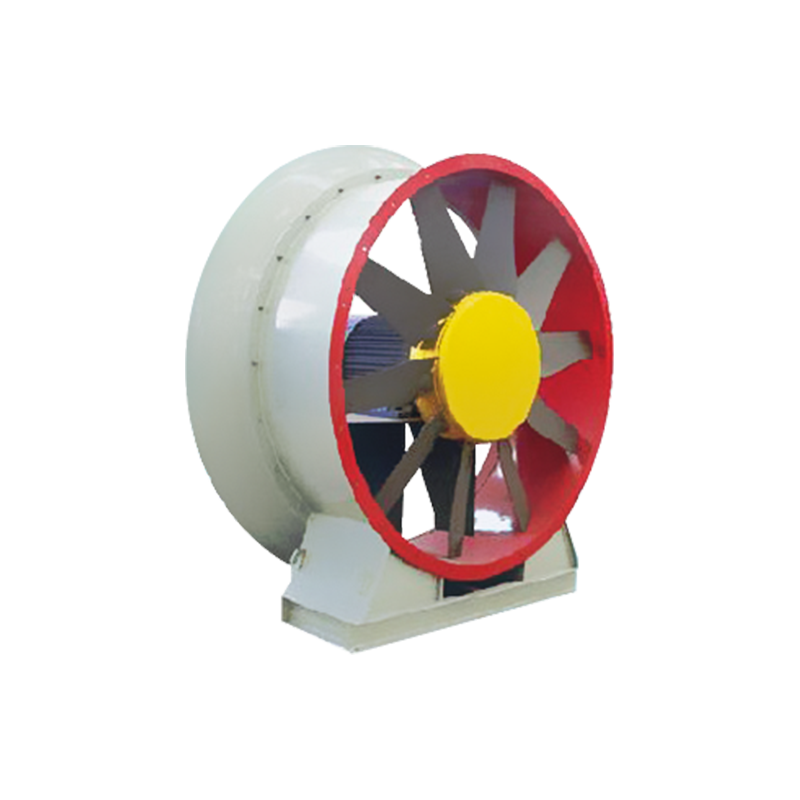
The working principle of industrial axial fans is simple and efficient. It uses the rotation of the fan impeller to drive air to flow along the direction of the fan axis, thereby achieving air transport and ventilation. The fan impeller usually consists of multiple curved blades, which generate a pressure difference through rotation, thus propelling the airflow. Due to the design of the blades, industrial axial fans can provide a large airflow and relatively stable air pressure with lower energy consumption, making them suitable for large-scale ventilation systems.
Unlike centrifugal fans, the airflow of axial fans mainly flows along the axis, while centrifugal fans push the airflow outwards through the centrifugal force of the impeller. Therefore, the airflow path of axial fans is relatively straight, with a large airflow and relatively low air pressure, suitable for environments requiring high flow rates and low pressure.
Main Features of Industrial Axial Fans
High Efficiency and Energy Saving
The design of industrial axial fans focuses on energy efficiency, especially in large-scale industrial applications, where their energy-saving effect is particularly significant. The fan blades usually adopt a streamlined design to reduce air resistance and energy loss. At the same time, the fan's motor power is reasonably matched to ensure that the fan achieves high efficiency during operation, thereby reducing operating costs.
Simple Structure and Easy Maintenance
The structure of industrial axial fans is relatively simple, mainly composed of a motor, impeller, bearings, and casing. Compared with other types of fans, it has fewer components, making maintenance more convenient. During long-term use, only regular inspection of the blades, bearings, and motor operation is required to ensure the normal operation of the fan and extend the service life of the equipment.
Strong Adaptability
Industrial axial fans perform excellently in various environments. Whether in harsh environments such as high temperature, high humidity, and corrosive gases, or under low temperature and low humidity conditions, they can operate stably. Furthermore, the blade angle of the fan can be adjusted to adapt to different airflow and pressure requirements. Whether for ventilation in large spaces or localized ventilation in small areas, industrial axial fans can provide the appropriate airflow to meet various application requirements.
Low Noise
Modern industrial axial fans utilize advanced noise reduction technology, minimizing the noise generated during operation. By optimizing blade design, improving the overall sealing of the fan, and reducing airflow vibration, axial fans can maintain a low noise level while ensuring sufficient airflow, meeting the strict environmental noise requirements of modern industry.
Application Fields of Industrial Axial Fans
Industrial axial fans are widely used in various industries. They are commonly used in places requiring large amounts of ventilation, such as large workshops, underground passages, sewage treatment plants, and warehouses. In these places, axial fans not only ensure good air circulation but also effectively remove harmful gases, maintaining a safe production environment.
Metallurgical Industry
The metallurgical industry typically produces a large amount of hot and harmful gases during the production process. Axial fans can be used for ventilation in high-temperature environments, helping workers maintain fresh air and avoiding the harm caused by high temperatures and harmful gases.
Chemical Industry
Chemical plants often need to remove chemical gases and dust, which are highly harmful to the environment and human health. Axial fans can provide an efficient gas emission system, ensuring air circulation within the plant and preventing the accumulation of harmful gases.
Power Industry
Power plants, especially thermal power plants, produce a large amount of hot gases and smoke. Axial fans are used in equipment such as boiler rooms and cooling towers to ensure cooling and ventilation effects, ensuring the normal operation of the equipment.
Underground Engineering
In underground construction and tunnel construction, air circulation is poor, requiring axial fans to provide fresh air, remove toxic gases, and prevent accidents.
Air Conditioning Systems
Some large buildings and shopping malls rely on axial fans to regulate air circulation, maintain fresh air, and improve indoor air quality.
Considerations for Selecting Industrial Axial Fans
Selecting a suitable industrial axial fan requires considering multiple factors, including the fan's airflow, pressure, motor power, and operating environment. Different application scenarios have different requirements for fans; therefore, when selecting a fan, it is necessary to comprehensively consider the equipment's performance, installation conditions, and future maintenance costs. The specifications of the fan need to be determined based on the required airflow and air pressure. Excessive airflow will lead to energy waste, while insufficient air pressure will fail to meet ventilation requirements. The motor power of the equipment needs to match the actual load of the fan to avoid unstable operation or overload. The noise level and energy efficiency of the fan should also be considered to ensure that the equipment performs well in terms of environmental protection and energy saving while meeting work requirements.
Frequently Asked Questions (FAQ)
1. What are the differences between industrial axial fans and centrifugal fans?
The main difference between industrial axial fans and centrifugal fans lies in the direction of airflow. Axial fans have airflow along the axial direction and are suitable for applications requiring large airflow and low air pressure; while centrifugal fans have airflow along the radial direction and are suitable for applications requiring small airflow and high air pressure. They differ in structure, working principle, and application scenarios.
2. How to maintain an industrial axial fan?
Regularly inspect the fan blades, bearings, motor, and other key components to ensure there are no looseness, wear, or abnormal noises. Regularly clean the fan, especially the blades, to prevent dust and dirt accumulation from affecting fan efficiency. Also, check the motor's working condition to ensure it is operating normally.
3. How long is the service life of an industrial axial fan?
Generally, the service life of an industrial axial fan can reach more than ten years, provided that regular maintenance and upkeep are performed according to the manufacturer's requirements. Timely replacement of worn parts and cleaning of accumulated dust can effectively extend the service life of the fan.
4. What are the noise control measures for industrial axial fans?
To reduce noise, the fan design should consider optimizing the blade shape to avoid excessive airflow vibration. Using sound insulation covers, reducing fan vibration, and optimizing the fan installation location can also effectively reduce noise.